A Rottweiler kennel, in Laval.
Nine years, one breed, and a rule that has never changed: never breed a nervous dog, no matter how good its papers look.
It started with Kessy, a K9 handler's own dog.
Before K9 Sentinelle, Étienne was a police K9 handler — fourteen years working with dogs selected for nerve, not looks. Kessy, his personal Rottweiler, never wore the uniform: she was too attached to home, too gentle with the neighbourhood kids. But her temperament — solid, never nervous, never startled — convinced Étienne this was exactly the kind of dog worth breeding.
Kessy had two litters before retiring right here. Her daughter Athena now carries the line forward. It was watching the difference between a puppy handled every day from birth and one left alone in a pen that brought Camille — a dog trainer he met in an obedience class — into the project.
Nine years later, our females live in the house, litters are born in a quiet corner of the living room, and every puppy is handled by the same person, every day, until they leave.
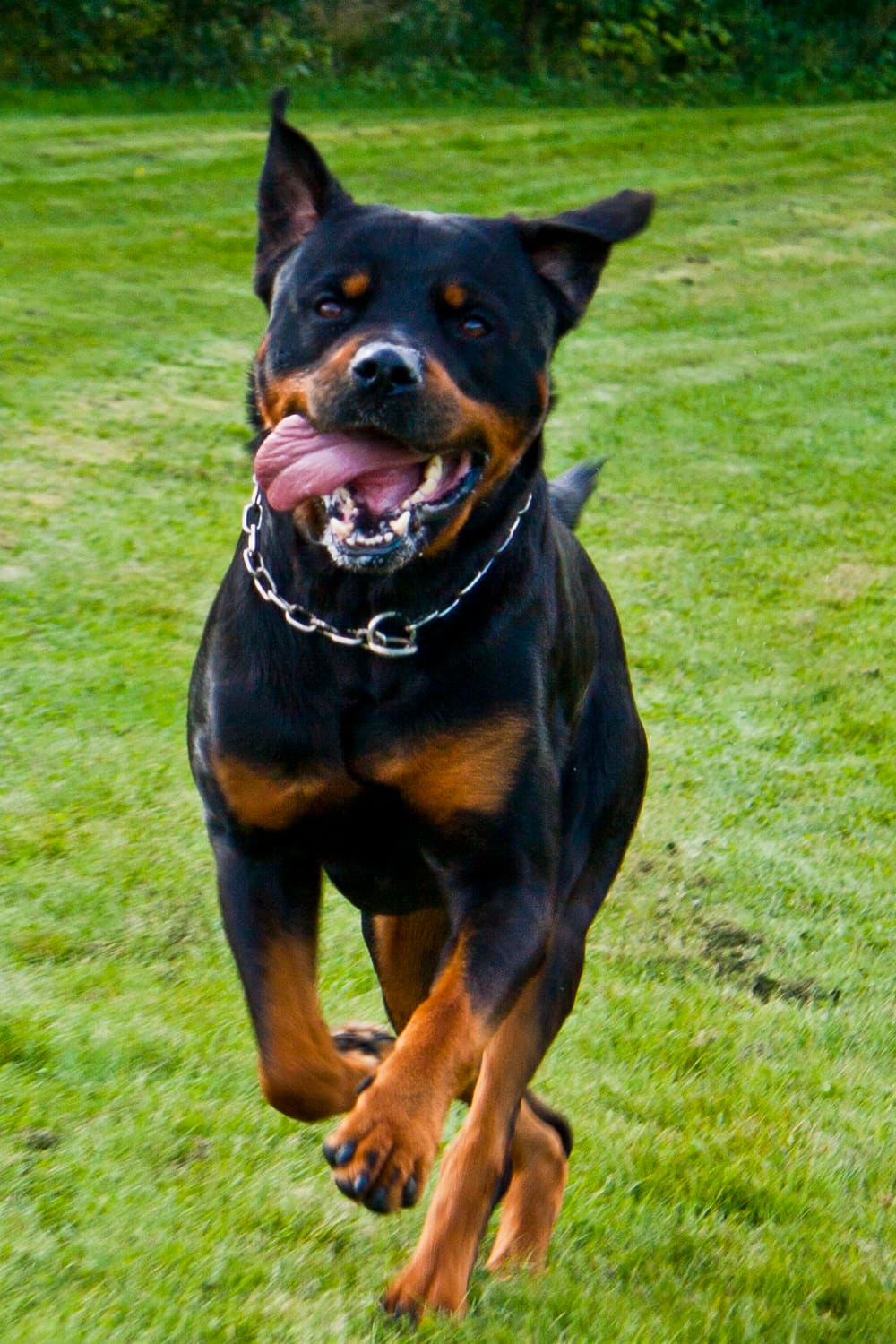
A working dog, not a trend.
We breed only one line. Knowing it well beats skimming ten.
Origin
Descended from the cart-pulling, cattle-driving dogs of the butchers of Rottweil, Germany. A dog built to haul carts and watch livestock all day — endurance and composure matter more than nervous energy.
Size: males 50-60 kg, females 38-48 kg. A powerful dog, never a fragile one.
Temperament
Calm and settled at home, deeply attached to its family, naturally reserved with strangers. Reserved is not aggressive: a well-socialized Rottweiler watches, it doesn't attack without reason.
Worth knowing: unprovoked aggression is almost always a breeding or socialization failure — not a breed trait.
What it takes
Ongoing socialization well past placement, obedience classes, real daily exercise, and an owner who is firm without ever being harsh. This is not a first dog for a household unwilling to commit to training.
Worth knowing: we decline to place a puppy with a household that has no plan for formal training.
Black and tan (or black and mahogany) is the only colour recognized by the standard, and that's what we breed for. We also don't chase the extreme size some untested lines advertise: an oversized, fast-grown Rottweiler is a Rottweiler whose joints will pay for it later.
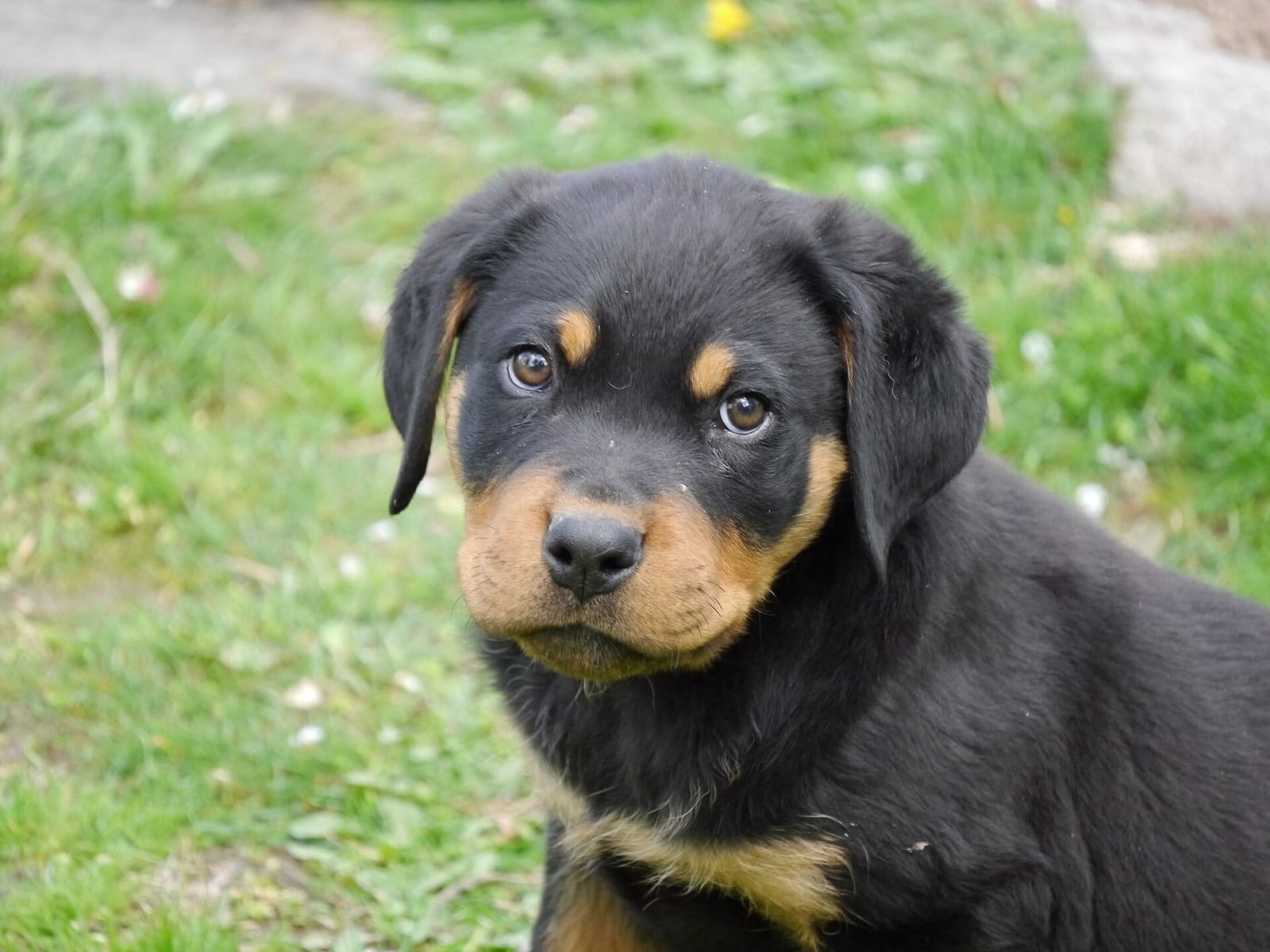
What we screen for, and what we guarantee.
No breeding happens until both parents have completed the screenings recommended for the breed. Certificates are handed to you in person — not summarized, not "available on request".
Hips and elbows
X-rays evaluated by a recognized body, on both parents, before mating — a breed this size doesn't forgive shortcuts.
Heart and eyes
Cardiac assessment and an annual ophthalmological exam by a specialist veterinarian.
DNA panel, including DM
Genetic testing for degenerative myelopathy and other known hereditary conditions, so two carriers are never paired.
A two-year guarantee against serious hereditary conditions, provided in writing. Replacement or refund, your choice.
Come and see before you decide.
We welcome families by appointment, even without a firm plan. You'll see where the puppies are born, meet the parents, and get to ask the hard questions.
One piece of advice, even if you don't adopt from us: be wary of a Rottweiler breeder who offers to meet you in a parking lot or won't show you the parents in person. It's the most reliable signal there is.